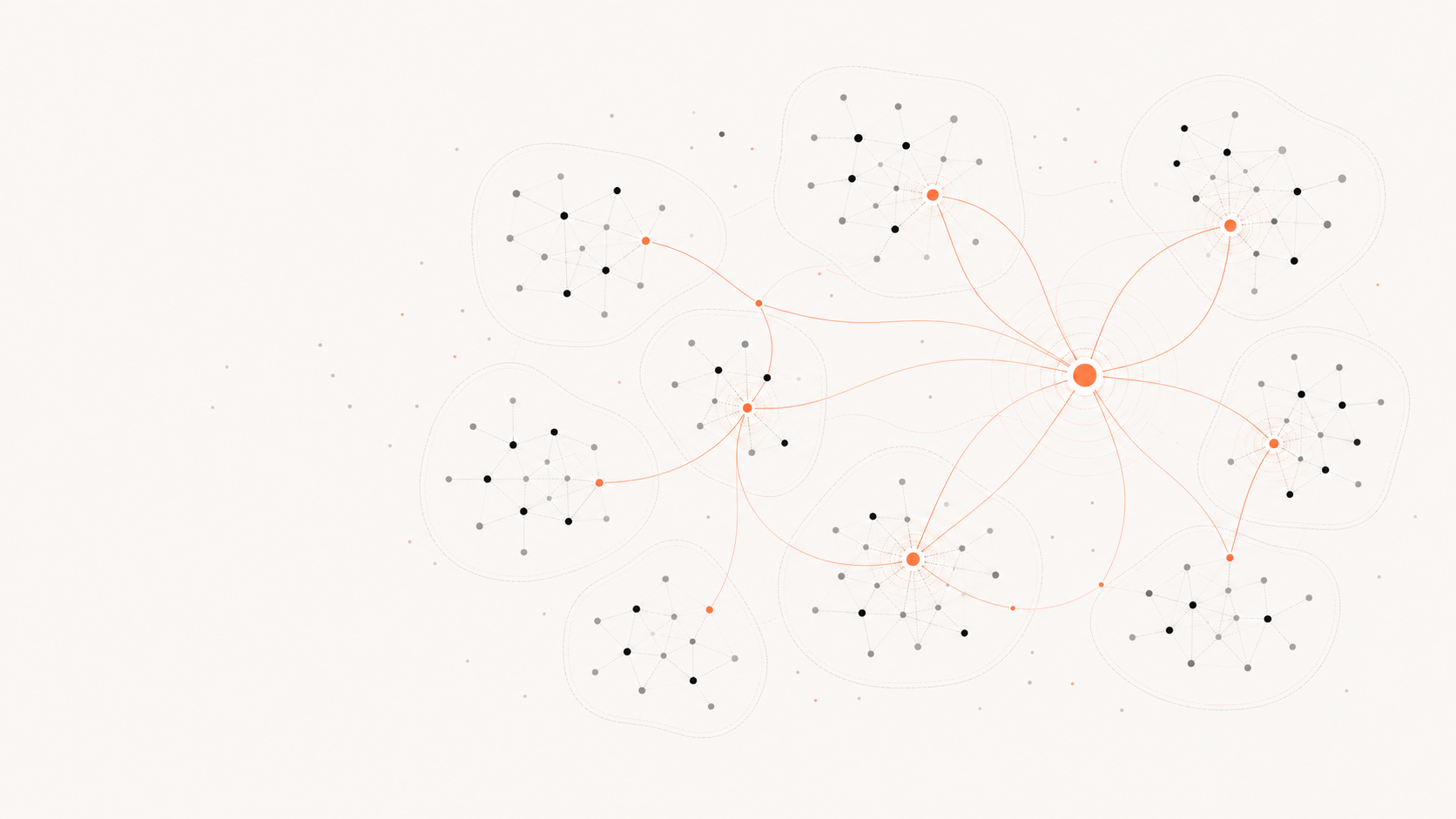
Fragmented environments
Disconnected platforms, siloed departments, and isolated AI systems prevent organizations from computing operational meaning across the enterprise.

A patent-pending technology that transforms fragmented, private data into interoperable computable context - enabling AI, enterprises, and markets to reason and coordinate across trust boundaries.
Sign up to learn moreDisconnected platforms, siloed departments, and isolated AI systems prevent organizations from computing operational meaning across the enterprise.
Legal, regulatory, and organizational boundaries make secure collaboration and interoperability difficult without centralizing sensitive data.
Static integrations and incompatible schemas create operational blind spots, causing critical signals to remain trapped and disconnected.
Contextbases transforms private enterprise data into interoperable computable context using the Context Mapping Protocol (CMP). CMP computes behavioural patterns, operational relationships, and emergent system dynamics across disconnected systems — before they appear in traditional indicators.
Most AI systems today operate on isolated snapshots of information disconnected from real-world operational behaviour.
Contextbases provides the missing contextual infrastructure layer that enables AI systems to:
Contextbases identifies behavioural deterioration across treasury systems, payments activity, operational workflows, and external signals to detect liquidity degradation, counterparty instability, and hidden systemic exposure — weeks before they appear in financial statements.
Converts activity across cloud, identity, endpoint, SaaS, and operational systems into interoperable threat context — enabling earlier detection of coordinated attacks without exposing sensitive raw telemetry.
Enables AI systems to reason on trusted operational context rather than isolated data snapshots — detecting agentic drift, monitoring degraded reasoning, and creating safer enterprise AI workflows.
Identifies behavioural stress across suppliers, logistics, infrastructure, workflows, and operational dependencies — detecting supply chain degradation and systemic operational risk before disruption impacts production or revenue.
Enables governments, regulators, and critical infrastructure operators to compute shared operational context across agencies without centralizing sensitive data — maintaining sovereignty, governance, and policy control.